
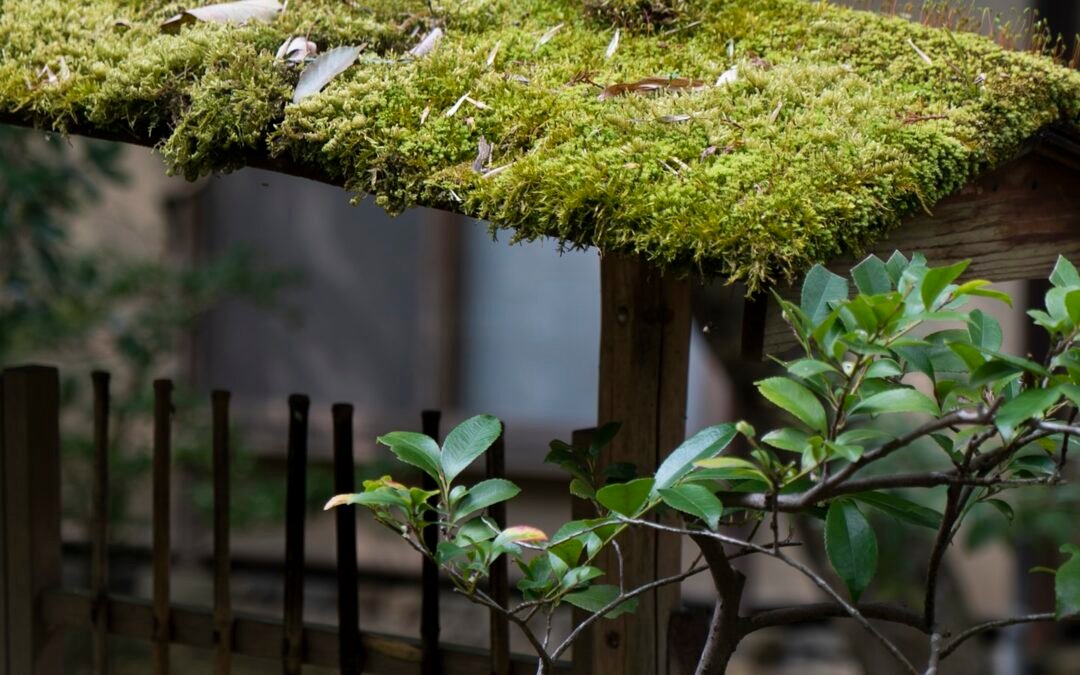
Drive through any neighborhood from Renton to Stanwood and you’ll spot it within a block — that velvety green stripe between shingle rows, the dark streaks running down a north-facing slope, the pale crusty patches that look almost painted on. Three different organisms, three different problems, and one shared cause: the Pacific Northwest is basically a greenhouse for things that shouldn’t be living on your roof.
Our crews at Premier Roofing NW spend a significant chunk of every spring dealing with biological growth, and the more homeowners understand what’s actually happening up there, the better decisions they make. Here’s the breakdown.
Algae: The Streaking You Probably Notice First
Those dark, almost-black streaks running vertically down your shingles aren’t dirt and they aren’t mildew — they’re a cyanobacteria called Gloeocapsa magma. It feeds on the limestone filler in asphalt shingles, which is why you see it almost exclusively on asphalt roofs and almost always on the north and west sides where the surface stays damp longest.
In western Washington, algae thrives because we hand it everything it needs: persistent humidity, mild temperatures year-round, and shaded slopes that dry slowly. It rarely causes structural damage by itself, but it’s a warning sign. Algae holds moisture against the shingle surface, accelerates granule loss, and almost always means moss isn’t far behind.
Algae is the easiest of the three to address. A proper soft-wash treatment kills it, and zinc or copper strips installed near the ridge release small amounts of metal ions every time it rains — enough to keep algae and moss from re-establishing. Pressure washing, on the other hand, strips granules and can void your manufacturer warranty. Don’t do it.
Moss: The One That Actually Pries Your Roof Apart
Moss is the heavyweight problem in our climate. Unlike algae, moss has root-like structures called rhizoids that anchor into the gaps between shingles, and as those mats thicken and absorb water — moss can hold up to twenty times its weight in moisture — they physically lift the shingle edges.
Once a shingle is lifted, wind gets underneath. Driving rain gets underneath. The seal strip that holds shingles flat eventually fails, and you’ve got an entry point for water directly into the decking. We see this constantly on older homes in Monroe, Bothell, and the heavily-treed parts of North Bend where conifers shed needles and create the perfect moss substrate.
The damage compounds over time. A thin green dusting in year one becomes a half-inch thick carpet by year five, and by then you’re not just removing moss — you’re often replacing sections of roof. The fix at the early stage is gentle removal (never scraping, never pressure washing) followed by a treatment that kills the moss at the rhizoid level so dead mats don’t keep holding water.
Lichen: The Quiet Long-Term Damage
Lichen is the one most homeowners can’t identify. It looks like pale gray, green, or sometimes orange crusty patches — almost like flat barnacles glued to the shingle surface. It’s actually a symbiotic organism: a fungus and an alga living together, with the fungus producing acids that slowly etch into whatever surface it’s attached to.
That etching is the problem. Lichen embeds itself deeply into the shingle granules, and even after it’s killed and removed, you’ll often see a permanent discoloration where the granules were dissolved. It’s the slowest-growing of the three but also the hardest to remove without causing damage, which is why we treat lichen early and aggressively.
Lichen is especially common in the wooded microclimates around Gig Harbor, Olympia, and the wetter parts of Whidbey Island where airflow is limited and humidity stays high for months on end.
Why Western Washington Is the Perfect Storm
The marine climate west of the Cascades is genuinely unusual. We get more annual rainfall than most of the country, but spread across more days at a lower intensity — meaning surfaces stay wet longer instead of getting drenched and drying out. Temperatures rarely drop low enough for long enough to kill biological growth. And our abundant evergreen canopy keeps roofs shaded and constantly seeded with spores from surrounding trees.
That combination is why a roof in Phoenix can go 25 years without ever growing anything, while a roof in Mill Creek can develop visible moss within five years of installation. It’s not a defect in the roof — it’s just the cost of living in a temperate rainforest.
Treatment and Prevention That Actually Works
Our standard approach starts with soft-wash treatment using roof-safe biocides that kill all three organisms without damaging the shingles. After removal, we install zinc or copper strips along the ridges of vulnerable slopes — those release just enough metal ions during rainfall to suppress regrowth for years.
We also look at the underlying conditions: trimming back overhanging branches, improving attic ventilation so the deck dries faster, and checking that gutters are clear so water isn’t sheeting across the lower courses of shingles. Treatment without addressing the conditions is a temporary fix.
If you’re seeing green, gray, or dark streaks on your roof and you’re not sure what stage you’re at, our team is happy to take a look. Call (425) 247-0088 to schedule a free roof assessment — we’ll tell you whether it’s a treatment situation, a partial repair, or something we can keep an eye on. Thirty-plus years working PNW roofs has taught us when to act and when to wait.