
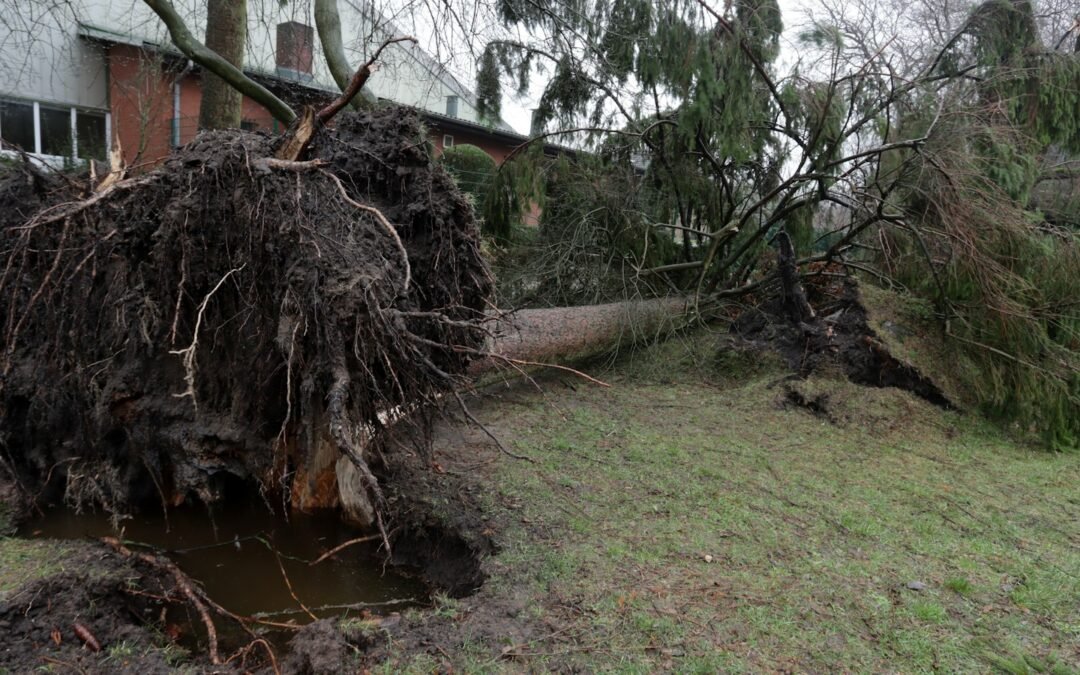
Every region has its signature weather, and ours is the fall and winter windstorm. Not tornadoes, not hurricanes, but deep Pacific low-pressure systems that swing up the coast and push wind across the Sound with enough force to take down thousands of trees at a time. We have been putting roofs back together after these storms for more than 30 years. Here is a short walk through the storms people still talk about, and what each one teaches about keeping a roof on a house.
October 12, 1962: The Columbus Day Storm
This is the benchmark. The Columbus Day Storm grew out of the remnants of a Pacific typhoon, re-intensified off the coast, and tore through Oregon and Washington with some of the strongest winds ever recorded in the lower 48 outside of a hurricane. Entire stands of timber came down, and roofs across the region lost shingles, sheathing, and in some cases whole sections. The lesson has not changed since: wind gets under a roof at the edges, and once it lifts the first course, it peels the rest.
January 20, 1993: The Inauguration Day Storm
Thirty years later, a fast-moving storm hit the Puget Sound lowlands directly on a weekday morning, with damaging winds from Olympia to Everett. Trees fell on homes and power lines across the region, and hundreds of thousands of customers lost power. It drove home that the lowlands, not just the coast, take direct hits. For roofers, it was a reminder that the damage is rarely the wind alone. It is the Douglas fir that had been leaning over the house for twenty years.
December 14 and 15, 2006: The Hanukkah Eve Storm
The 2006 storm came at the end of a very wet stretch. Days of heavy rain saturated the ground, then the wind arrived overnight and pushed over trees whose roots had nothing left to hold. More than a million customers in the region lost power, some for over a week. Roof damage was widespread and mostly of two kinds: trees through roofs, and shingles stripped from ridges, rakes, and eaves. This storm is the clearest example of a pattern we watch for every year. An atmospheric river followed by a wind event is far more dangerous to trees than either one alone.
November 19, 2024: The Bomb Cyclone
The most recent one is still fresh. A storm off the coast intensified extremely rapidly, meeting the definition meteorologists call a bomb cyclone, and drove strong winds across the region. East King County was hit especially hard. Neighborhoods in Bellevue, Issaquah, Sammamish, and North Bend saw heavy tree damage, and hundreds of thousands of homes lost power, many for days. What we saw on those roofs was consistent with every storm before it.
What Fails First in a Windstorm
Trees fail first. By a wide margin, the most serious roof damage in every one of these storms came from trees and limbs, not from wind on the shingles. The big conifers that make this region beautiful are tall and relatively shallow-rooted, and wet ground makes them worse. If a tree can reach your roof, it is a roofing issue.
Edges fail next. Wind does not push down on a roof. It creates lift, and lift is strongest at the eaves, rakes, and ridge. Starter strip that was skipped or installed backward, rake edges without proper adhesive, and ridge caps nailed short let go first. Once an edge course lifts, the wind gets under the next one.
Nailing decides the rest. A shingle nailed high, above the manufacturer’s nail line, is held by one layer of material instead of two. A shingle with four nails where six were specified has that much less holding it. In the roofs we repair after storms, high nailing and under-nailing account for most of the shingle loss on roofs that were otherwise in decent shape. It is invisible from the ground and it matters more than the shingle brand.
Loose flashing and old sealant follow. Wind-driven rain finds any flashing that has lifted, and brittle sealant along ridge vents and pipe boots does not hold.
What This Means for Your Roof
Windstorm history is mostly a lesson in preparation. Trim or remove trees that can reach the house, especially after a wet fall when the ground is soft. Have the edges checked: starter strip, rake attachment, ridge cap. If your roof is being replaced, ask about the nailing pattern and confirm the installer follows the manufacturer’s specifications, since that is what the manufacturer warranties we offer are built on. Our crews handle emergency tarping and storm damage repair, and we help homeowners through the insurance claim process when a tree or the wind does its work.
Before the Next One
Premier Roofing NW has served the Greater Puget Sound area for more than 30 years, including the cleanup after the 2006 and 2024 storms. If you would like your roof checked for the things that fail first in wind, our inspections and estimates are free, with no pressure. Discounts are available for seniors, military, and first responders. Call us at (425) 247-0088 and we will make sure your roof is ready before the next November low rolls in.