
Stand on a bluff above Penn Cove on a winter morning and you can taste the salt in the air before you see the spray. That same marine atmosphere that makes Whidbey Island beautiful is also a slow-motion stress test for any roof — and metal handles it better than almost anything else.
What Salt Air Actually Does to a Roof
Marine air carries fine chloride particles miles inland. On Whidbey, that means homes from Clinton to Coupeville to Oak Harbor get exposed year-round, not just the waterfront ones. Those chlorides settle on roofing surfaces, get reactivated by rain and condensation, and slowly attack anything not built to resist them.
Asphalt shingles in this environment tend to lose granules faster, develop softer mats sooner, and grow heavier moss and lichen colonies — because the same humidity that carries salt also keeps the roof surface damp for most of the year. Standard galvanized metal flashing corrodes faster too. Our crews at Premier Roofing NW have seen ten-year-old asphalt roofs on the island that look more like twenty-year-old roofs on the dry side of the Cascades.
Why Metal Holds Up Where Other Materials Struggle
A quality metal roof installed for marine conditions uses panels with a coating system specifically rated for coastal exposure — typically a Galvalume base with a Kynar 500 or comparable PVDF finish. That coating is what does the heavy lifting against salt and UV. It doesn’t chalk out, doesn’t fade significantly, and doesn’t break down the way standard paint finishes do.
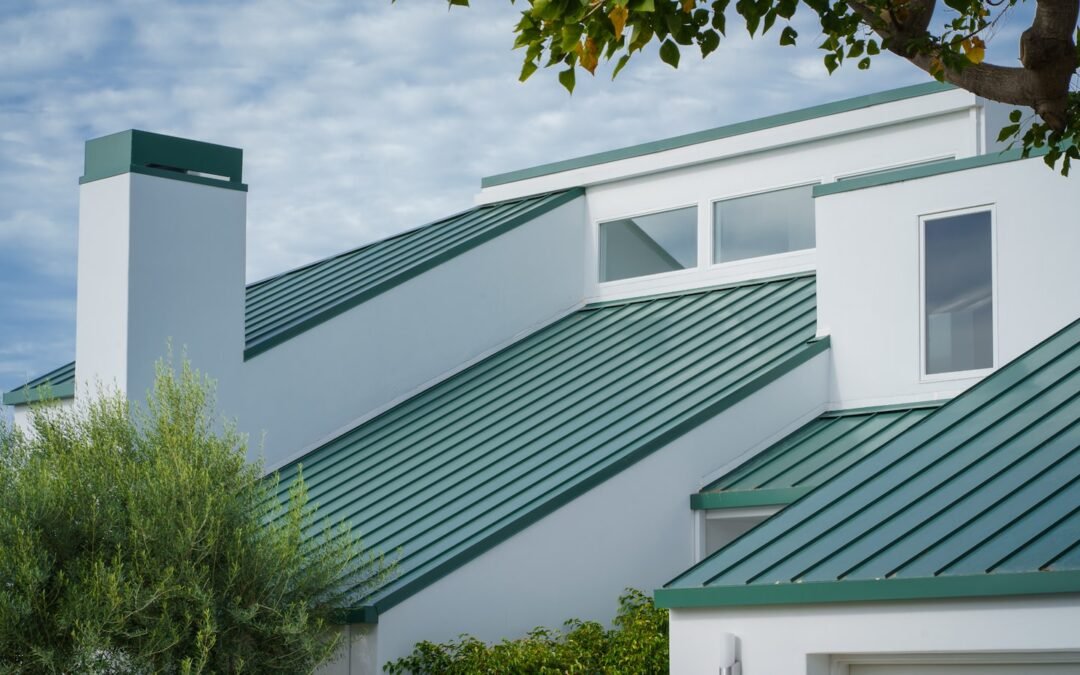
The panel profile matters too. Standing seam systems, which are our most-recommended profile for Whidbey homes, have raised seams that interlock without exposed fasteners. No exposed fastener means no rubber washers degrading in salt air, no rust streaks running down panels, and no maintenance schedule for re-tightening screws every few years. Water sheds off the smooth panel face fast — important when winter brings sideways rain off the Strait of Juan de Fuca.
Longevity in Real PNW Terms
An asphalt roof on Whidbey, even a premium architectural product, realistically gives you somewhere in the range of fifteen to twenty-five years before it needs replacement — and that’s with consistent moss treatment and the occasional repair. A properly installed standing seam metal roof, in the same location, will typically outlast two asphalt roofs back-to-back. We’ve inspected metal roofs on the island that are pushing forty years and still have decades of life left in the panels themselves.
That longevity changes the conversation about a roof. Instead of planning for the next replacement, you’re planning for the rest of the time you’ll own the home.
What to Look for in a Marine-Grade Install
Not every metal roof is built for island conditions. Things that matter on Whidbey that don’t matter as much in inland installs:
- Stainless or coated fasteners throughout, not standard galvanized
- Concealed clip systems on standing seam panels, allowing the metal to expand and contract with temperature swings without stressing the fastener points
- Marine-grade underlayment rated for high-humidity environments — not just standard synthetic
- Properly detailed valleys and transitions with adequate overlap, because wind-driven rain on the island moves up and sideways, not just down
- Compatible flashing metals — mixing dissimilar metals (like aluminum panels with copper flashing) causes galvanic corrosion that can ruin a roof in years
Our team handles these details as standard practice on every island install, but it’s worth knowing what to ask any contractor about before signing.
Energy and Comfort Considerations
Metal roofs reflect a meaningful amount of solar radiation, which matters more on Whidbey than people sometimes expect. Summer afternoons on the south-facing slope of a Coupeville home can push attic temperatures high enough to cook insulation and bake shingles from below. A reflective metal panel knocks that radiant load down significantly, which extends the life of your attic insulation, your ventilation components, and any HVAC equipment up there.
Combined with proper attic ventilation — which we’ll spec as part of any metal install — the result is a cooler attic in summer, a drier attic in winter, and less stress on the entire roof system year-round.
When Metal Is the Right Call
Metal isn’t automatically the right answer for every Whidbey home. Architectural style, HOA restrictions, and your timeline in the home all factor in. But for waterfront and near-waterfront properties, for homes with steep complex roof lines that are hard to access for re-roofing, and for owners planning to be in the house for the long haul, metal makes a strong case on its own merits.
If you’re weighing your options on a Whidbey roof — whether that’s Langley, Freeland, Greenbank, or Oak Harbor — reach out to Premier Roofing NW at (425) 247-0088. We’ll come out, walk your property, talk through what makes sense for your specific exposure and home, and write up a free assessment with no obligation.