
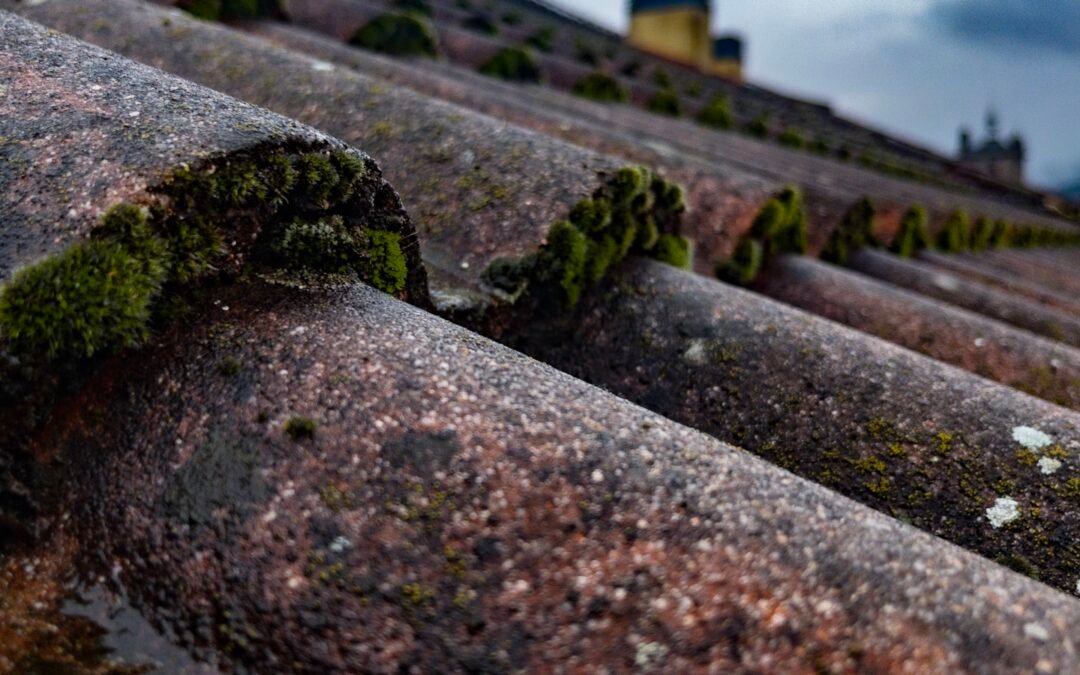
Every August, somewhere between Bellingham and Mount Vernon, a homeowner looks up at a green stripe on the north slope, borrows a pressure washer, and takes several years off the life of a perfectly good roof in a single Saturday. We understand the instinct. Moss looks like grime, and grime gets blasted off. But asphalt shingles are not a driveway, and the wrong removal method does more damage than the moss itself. Back in May we wrote about what moss, algae, and lichen actually are and why our climate grows them so well. This is the practical companion: what to do about moss, what never to do, and how to tell when moss is telling you something bigger.
Never Pressure-Wash Asphalt Shingles
This is the single most important rule, so it goes first. The granules on an asphalt shingle are its armor — they block UV, shed water, and protect the asphalt layer underneath. A pressure washer strips them off by the pound. The roof looks clean for a season, then ages at double speed, and in most cases the manufacturer warranty is voided in the process.
The same warning applies to aggressive scraping, stiff wire brushes, and power brooms. Anything that tears moss off by force also tears at the shingle surface and the seal strips holding shingles flat. Across Whatcom County we regularly inspect roofs that were “cleaned” this way a few years earlier, and the granule loss is obvious from the ladder.
What Safe Removal Actually Looks Like
Effective moss treatment works with chemistry and patience instead of force:
- Soft-wash treatment. Roof-safe biocides applied at low pressure kill moss down to the rhizoids, the root-like structures that anchor it between shingles. Dead moss releases its grip and can be gently removed or allowed to break down and wash away over subsequent rains.
- Gentle manual removal. Where mats are thick, a soft brush used carefully with the slope of the shingles, never against it, clears the bulk without lifting shingle edges.
- Timing. Late summer is a good treatment window. The moss is stressed by dry weather, the roof is safe to work on, and the treatment has time to finish its work before fall rains would otherwise feed regrowth.
A treated roof also sheds the moisture problem that moss creates. Moss holds many times its weight in water against the shingle surface, so removal is not cosmetic — it is drying your roof out.
Zinc and Copper Strips: The Prevention That Works
Once the roof is clean, the goal is keeping it that way without annual battles. Zinc or copper strips installed near the ridge do exactly that. Every time it rains — which, at 38 or so inches a year spread across most of the calendar, is often — the runoff carries trace metal ions down the slope. Those ions suppress moss and algae before they establish.
Strips are inexpensive relative to what they prevent, they last for years, and they are invisible from the street. On the heavily treed lots common around Bellingham and the Skagit Valley, we consider them standard equipment rather than an upgrade.
When Moss Means the Roof Is Beyond Saving
Sometimes the honest answer is that treatment no longer makes sense. Signs the moss has won:
- Shingle edges are lifted or curled where mats have pried them up, and they do not lie flat again after removal
- Widespread granule loss with the black asphalt substrate showing through
- Soft or spongy spots underfoot, which point to water already in the decking
- Moss growing in the same heavy pattern within a year of proper treatment, meaning the shingle surface itself has degraded enough to hold water
At that point, money spent on repeated cleaning is better put toward replacement. A new roof with 50-year shingles, proper ventilation, and zinc or copper strips from day one resists moss far better than a worn roof ever will, and it carries a 45–50 year manufacturer warranty.
Get an Honest Answer Before You Spend Anything
The hard part for most homeowners is not the moss — it is knowing which situation they are in. That is a ten-minute determination for a crew that has spent 30+ years on Western Washington roofs. Premier Roofing NW offers free roof inspections across the Greater Puget Sound area, including Bellingham, Mount Vernon, and the rest of Whatcom County. We will tell you plainly whether your roof needs a treatment, a repair, or a replacement, and we offer financing through Enhancify plus discounts for seniors, military, and first responders. Call us at (425) 247-0088 before you or anyone else points a pressure washer at your shingles.