
Not every leak comes from a windstorm. A large share of the leak calls we run between October and March, from Lynnwood to Marysville, come after three or four days of steady, unremarkable rain. The roof simply stayed wet long enough that every weak spot had time to fail. That is what an atmospheric river does to a Puget Sound roof, and the first ones of the season arrive right about now. Here is how sustained rain gets in, what you notice from inside, and what our crews look for on the roof.
Why Days of Rain Are Different From a Storm
A shingle roof is designed to shed water quickly. Rain hits, runs downhill over the overlaps, and is gone. An atmospheric river is a long stream of Pacific moisture that can deliver an inch or two of rain a day for several days in a row, often with a steady south wind behind it. The roof never dries out. Water that would normally run off before it could travel sideways now has time to sit, soak, and creep. A gap that sheds a shower will not necessarily shed a week.
Capillary Action at Laps and Flashings
Every shingle roof is built from overlaps, and water has a habit of wicking between two closely spaced surfaces, even uphill. Normally the sealant strip and the pitch of the roof keep this from mattering. When the roof is saturated and the sealant has aged, water climbs between courses, especially where a shingle lies a little flat over a lap or where the courses meet step flashing along a wall. The same happens at headwall flashing and at pipe boots where the rubber has cracked.
Saturated Valleys
Valleys carry the runoff from two slopes, so during a long rain they run like a creek. Add a mat of fir needles or maple leaves and you have a small dam. Water backs up along the valley edge and works under the shingles on either side. On older closed-cut valleys, the shingles along the cut line are often the most worn on the roof, and an exposed nail in a valley will leak every time the valley fills. We check valleys for debris, the cut line, and the underlayment beneath where we can see it.
Gutters Overflowing Behind the Fascia
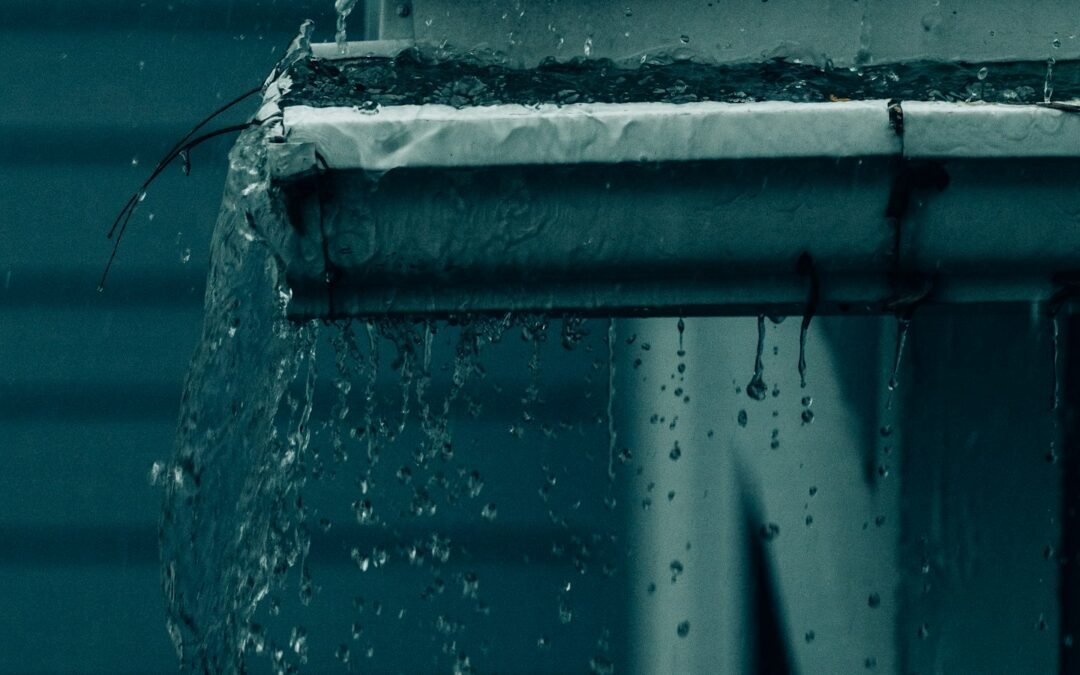
A clogged gutter in a downpour overflows over the front edge, which is messy but usually harmless. A clogged gutter in a multi-day soak fills to the back edge and sends water behind the gutter, down the fascia board, into the soffit, and sometimes behind the siding. A missing or short drip edge makes this far worse, because nothing is directing water into the gutter in the first place.
The signs are peeling fascia paint, stains on the underside of the soffit, water in a crawlspace near a downspout, or dampness on an interior wall near an outside corner. Homeowners in Bothell and Mill Creek with mature firs over the house see this more than anyone.
Wind-Driven Mist Under Lifted Shingles
Atmospheric rivers are rarely calm. A steady wind of 20 or 30 miles per hour carrying mist is typical, and mist goes places a downpour does not. Shingles whose seal has broken lift a fraction of an inch, and mist rides up underneath onto the underlayment. Fresh synthetic underlayment handles that. Twenty-year-old felt does not.
Nail pops belong here too. A nail that has backed out lifts the shingle above it and leaves a small hole in the one it went through. Each day of rain, that nail head weeps a little. A week later there is a brown ring on a bedroom ceiling. It is one of the smallest repairs we do, if it is caught before the decking around it softens.
What a Homeowner Notices
- A ceiling stain that shows up several days into a rain event, not the first night
- A drip that stops when the rain stops and comes back with the next front
- A musty smell in a closet or at the attic access
- Water showing up in odd places: the top of a window frame, the base of an exterior wall
- Peeling paint or a green tint on the fascia behind the gutters
What We Look For
On a call like this, we start in the attic with a flashlight, following the stain uphill to where the water actually enters. Then we walk the roof, checking sealant bonds, laps, flashing, valleys, nail pops, the back edge of the gutter, and the drip edge. Most of what we find is a repair. When whole slopes have lost their seal or the underlayment has failed across a wide area, that is a replacement conversation, and we will say so plainly.
Get It Looked At Before the Next River
If you noticed a stain during last fall’s rains, or would like a professional set of eyes on your roof before this season’s atmospheric rivers arrive in earnest, we are glad to help. Premier Roofing NW has served the Greater Puget Sound area for more than 30 years, and our inspections and estimates are free, with no pressure. Discounts are available for seniors, military, and first responders. Call us at (425) 247-0088 and we will find where the water is getting in before the next long rain does.