
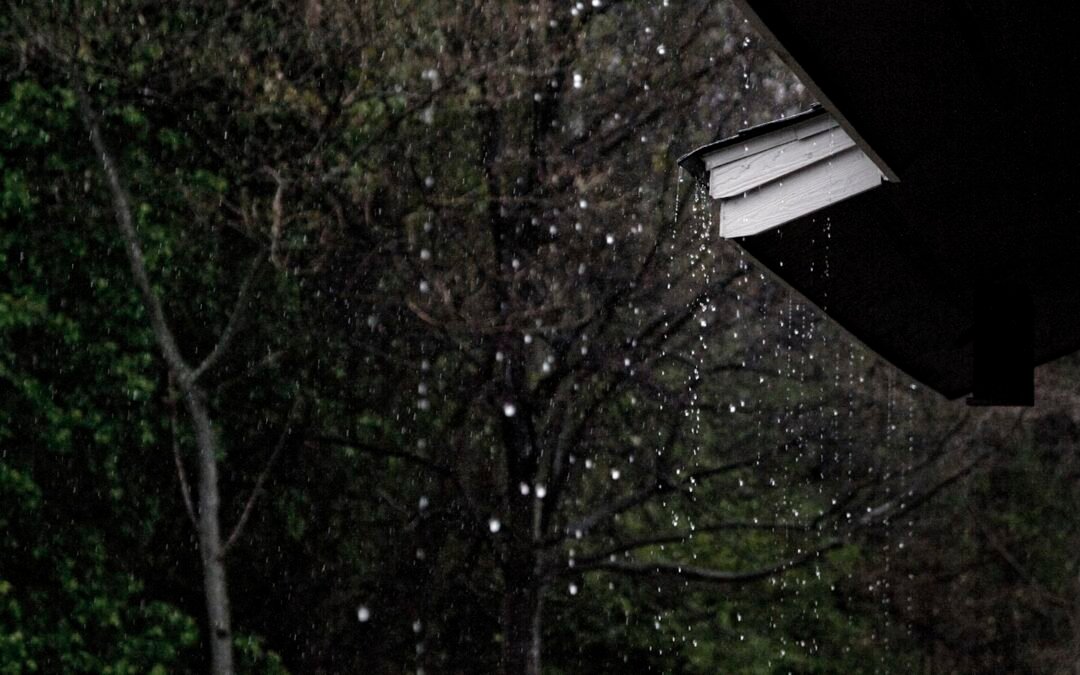
The sun finally broke through over Puget Sound last week, and homeowners from Stanwood to Renton are heading outside to assess what eight months of rain, wind, and atmospheric rivers left behind. Most of the damage we see from a wet PNW spring doesn’t announce itself — it whispers, then shows up as a ceiling stain in July.
Why Winter Damage Hides Until Late Spring
Pacific Northwest storms don’t usually arrive as single dramatic events. They roll in as weeks-long systems that saturate everything: shingles, underlayment, flashing, attic insulation. Water finds the smallest opening, wicks sideways along framing, and pools quietly above drywall. By the time a brown ring appears on a bedroom ceiling, the leak may have been active since January.
Our crews at Premier Roofing NW see this every spring. A homeowner in Monroe calls about a stain that “just showed up,” and when we get into the attic we find insulation that’s been wet for months, mold starting on the rafter bay, and a flashing failure at a dormer that looked perfectly fine from the driveway. The roof passed every visual test from the ground — but it had been failing slowly the whole time.
Granule Loss: The Quiet Tell
Walk the perimeter of your home and check the splash zone at the base of your downspouts. If you see a coarse, sandy buildup that looks like coffee grounds, those are asphalt granules washed off your shingles. A small amount is normal on a roof in its first year and again as it ages out. A heavy accumulation after a wet winter — especially on a roof less than fifteen years old — means the storm cycle accelerated the wear.
Granules are the shingle’s UV shield. Once they’re gone, the asphalt underneath cooks fast in our summer sun, and the shingle becomes brittle in a single season. We’ve inspected roofs in Bothell and Mill Creek where one bad winter took five years off the expected lifespan.
Lifted Shingles and Flashing You Can’t See From Below
The Puget Sound convergence zone funnels gusts in odd directions, and shingles that survived the first big windstorm of the season often loosened during the third or fourth. From the ground they look flat. From a ladder you can sometimes see the tabs sitting slightly proud. From the roof, you can lift them with one finger — and that’s where the next windstorm will start peeling.
Flashing is the other quiet failure point. Step flashing at sidewalls, counter-flashing at chimneys, and the boots around plumbing vents all expand and contract with our freeze-thaw cycles. By spring, the sealant is often cracked, the boots are split, and any one of those penetrations is a doorway for water.
What an Attic Inspection Actually Reveals
A roof inspection done only from the outside misses half the story. When our team does a free assessment after a wet winter, we go into the attic with a flashlight and a moisture meter. We’re looking for:
- Dark staining on the underside of the roof deck, especially around penetrations
- Insulation that’s matted, discolored, or noticeably heavier in one spot
- Daylight visible through nail holes or flashing joints
- Mold on rafter bays, particularly on the north-facing slope where things dry slowly
- Rusted nail heads — a sure sign of recurring condensation or active intrusion
In Whidbey Island and Gig Harbor homes especially, where marine air keeps humidity high year-round, we often find moisture problems that started as ventilation issues and turned into structural ones. Catching that in May is a repair. Catching it in August, after the deck has dried and warped, is a much bigger job.
What to Do in the Next Few Weeks
The window between late spring and early summer is the best time of year to handle hidden storm damage. The roof is dry enough to walk, the weather is stable enough to schedule work, and our crews aren’t yet stacked up with mid-summer replacements. Waiting until you see a ceiling stain almost always means waiting too long — by then the underlayment is compromised and the repair scope has grown.
If anything on your roof feels “off” — a stain that wasn’t there last fall, a downspout full of grit, a shingle that looks slightly out of line — get eyes on it now while it’s still a small problem.
Give Premier Roofing NW a call at (425) 247-0088 to schedule a free post-winter inspection. Our team has spent more than thirty years reading PNW roofs, and we’ll tell you exactly what we find — whether that’s a single flashing repair or something bigger hiding in the attic.