
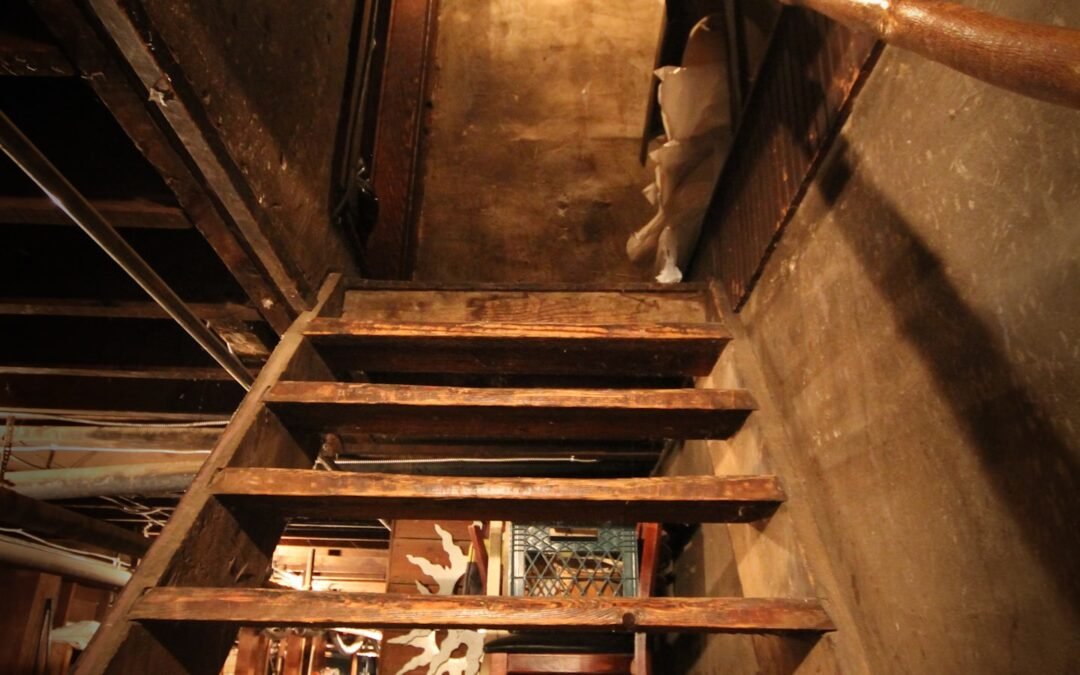
Crawl into a Mill Creek attic on an August afternoon and you’ll understand the problem in about thirty seconds. The air is dense, the rafters are hot to the touch, and the shingle decking above your head is radiating heat like a stovetop. That’s not just uncomfortable — it’s actively shortening the life of the roof above it.
How Poor Ventilation Cooks Shingles From Below
Most homeowners think about shingle aging as a top-down process: sun, rain, moss. But there’s a parallel process happening from below that’s just as damaging. When an attic isn’t ventilating properly, the heat that builds up under the roof deck during the summer has nowhere to go. Deck temperatures can climb thirty to forty degrees above ambient on a hot day, and the asphalt mat in the shingle above is being baked by both the sun and the trapped air underneath.
The result is accelerated drying of the asphalt binders, faster granule loss, and shingles that become brittle years earlier than they should. We’ve inspected Mill Creek roofs that were only twelve to fifteen years old but had the brittle, cracked profile of a twenty-five-year-old roof — and almost every time, the attic told the story.
The Winter Side of the Same Problem
The same ventilation system that handles summer heat is what manages winter moisture. PNW homes generate enormous amounts of indoor humidity from showers, cooking, laundry, and breathing. That moisture rises into the attic, and if it can’t escape, it condenses on the underside of the cold roof deck overnight.
Over a winter, that condensation:
- Saturates insulation, dropping its R-value significantly
- Drips back onto framing and ceiling drywall, mimicking a roof leak
- Promotes mold and mildew growth on rafters and sheathing
- Rusts nail heads, which then telegraph through to the shingle surface
- Rots roof decking from the underside — damage that’s invisible until tear-off
Our crews at Premier Roofing NW find this on roofs every winter where the homeowner is convinced they have a leak, when what they actually have is a ventilation failure.
Why Mill Creek Homes Are Particularly Vulnerable
Mill Creek’s neighborhoods are dominated by homes built between the mid-1980s and the mid-2010s, and a meaningful portion of them have ventilation systems that were either undersized at construction or compromised by later remodels. Two specific patterns we see constantly:
Vaulted and cathedral ceilings. Many Mill Creek homes have great rooms with vaulted ceilings that leave very little usable attic space above them. These designs require continuous baffle ventilation from soffit to ridge — and when insulation has been blown in over the years without protecting those baffles, the airflow gets choked off. The vaulted section becomes a sealed pocket that heats and humidifies with nowhere to vent.
Mismatched intake and exhaust. A ridge vent without adequate soffit intake doesn’t ventilate — it just sits there. Same for gable vents added without rebalancing the rest of the system. We routinely find Mill Creek attics with three or four different vent types fighting each other, none of them moving meaningful air.
Bath fans dumping into the attic. This was common practice for decades and is still surprisingly frequent. A bath fan exhausting moist air directly into the attic instead of through the roof can saturate a ventilation system on its own.
What Good Ventilation Actually Looks Like
A properly ventilated attic moves air continuously from low (soffit intakes at the eaves) to high (ridge vent or properly positioned exhaust). The system needs roughly balanced intake and exhaust square footage, with the intake equal to or slightly greater than the exhaust. When that balance is right, the attic temperature in summer stays within ten to fifteen degrees of ambient, and winter moisture clears out before it can condense.
For most Mill Creek homes, that means:
- Continuous soffit venting along all eaves, with baffles protecting the airflow path through the insulation
- A continuous ridge vent at the peak, sized correctly for the attic volume
- Closing or carefully managing any gable vents that would short-circuit the soffit-to-ridge flow
- Direct, sealed bath fan ducting through the roof, not into the attic
- Insulation that’s properly distanced from the underside of the deck
This isn’t expensive work in scope, but it has to be done right. A ridge vent installed without verifying soffit intake is just a hole in the roof.
When to Address It
The best time to evaluate ventilation is before you replace the roof — because that’s when fixing it is straightforward, and getting it wrong locks in another twenty years of shingle damage. If your roof is approaching replacement age, or if you’ve noticed warm second-floor rooms in summer, ice buildup at the eaves in winter, or unexplained ceiling stains, a ventilation inspection should be part of the conversation.
Our team is happy to climb into your attic, evaluate what’s actually happening up there, and tell you what would make a difference. To get on the schedule for a free assessment, give Premier Roofing NW a call at (425) 247-0088 — we’ll take a careful look at both the roof and the system underneath it, and lay out the options clearly.